Our Higg MSI lifecycle assessment quantifies the environmental impact of RG Fibers' recycled yarn — from global warming potential to water scarcity — and benchmarks it against industry alternatives.
Our Recycled Knitting Yarn, Recycled Weaving Yarn, Recycled Melange Yarn, and Recycled Cotton Yarn manufacturing significantly reduces the consumption of virgin cotton. By recycling old textile material and cotton cut-offs, we prevent the high ecological costs of large cotton farming by eliminating the excessive consumption of water, the application of pesticides, and the land degradation. This minimizes the use of valuable resources while relieving the pressure on land for agriculture.
Our recycling process consumes much less energy than the conventional production of yarn. Much of the recycled material still maintains its original color, which obviates the need for extensive dyeing processes in most instances. This not only helps in the conservation of the energy, but even minimizes the amount of wastewater that is released during the manufacturing and aids in creating less environment impact by the chemicals that are used for dyeing. The recycled yarn process that we follow is specifically curated to addresses the growing issue of textile waste. We focus on upcycling the fabric scraps, garment cuttings, and post-industrial textile scraps, this helps in keeping up the enormous amounts of waste out of the landfills.
We sort, process, and mix our fibers with care to deliver the highest quality. By transforming pre- and post-consumer textile waste into usable yarns, we extend the life of material which could otherwise be discarded. This efficient use of material reduces the quantity of raw material needed, which subsequently reduces the ecological impact of textiles.
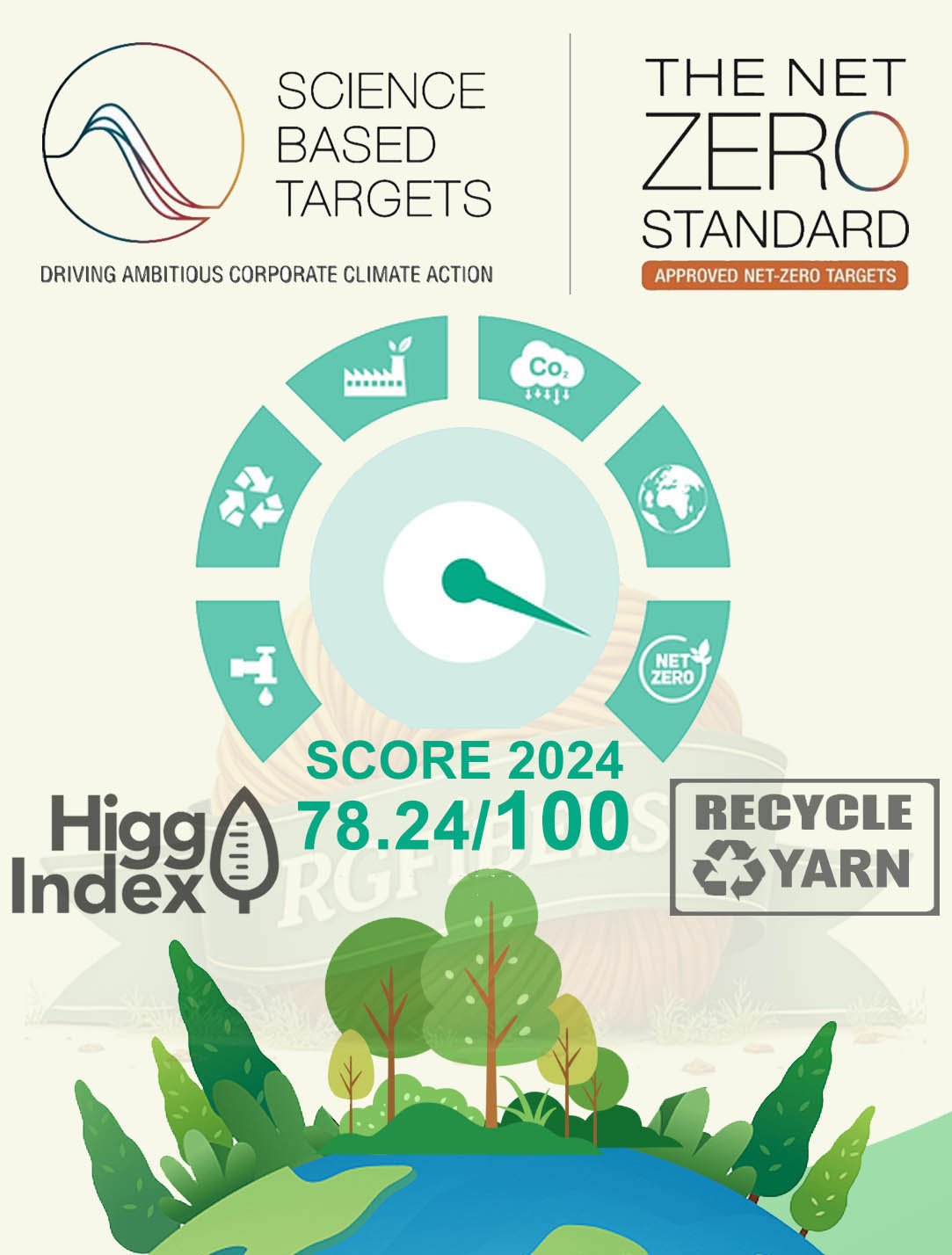
The Higg Index is a comprehensive set of tools designed to measure sustainability across brands, facilities, and products. Higg Score of recycled cotton fiber estimated for 1 kilogram.
Global Warming
0.325 Kg CO₂e
Eutrophication
0.001 Kg
Water Scarcity
0.039 M³
Chemistry
2 Units
Fossil Fuel Depletion
3.31 MJ
RG Fibers has successfully conducted the Higg MSI material lifecycle self-assessment. Our recycling process was evaluated across key environmental factors — raw material usage, waste management, water consumption, energy efficiency, emissions, and chemical utilisation.
Yarn Volume
18,000 MT
Waste Garment
10,800 MT
Pet Waste
7,200 MT
Water Saving
3,88,41,120 KL
Chemical Saving
1,61,838 KG
CO₂ Emission Saved
49,630 MT
Our coloured knitted fabric, produced using recycled yarns, achieves an impressive Higg impact score of 11.41 per kilogram — among the lowest compared to other textile materials on the Higg Index. No additional dyes or colorants needed.
♻️ Recycled Fabric
RG Fibers — lowest impact
🔵 Recycled Polyester
Slightly higher footprint
🌿 Organic Cotton
Higher water footprint
🔴 Virgin Cotton
Highest environmental cost
| Material | Global Warming | Eutrophication | Water Scarcity | Chemistry | Fossil Fuel | Total Score |
|---|---|---|---|---|---|---|
| ♻️ Recycled Fabric (RG Fibers) | 3.37 | 2.00 | 0.29 | 3.16 | 2.59 | 11.41 |
| 🔵 Recycled Polyester | 3.66 | 1.58 | 0.47 | 3.65 | 2.80 | 12.16 |
| 🌿 Organic Cotton | 6.56 | 9.80 | 6.69 | 7.78 | 5.40 | 36.23 |
| 🔴 Virgin Cotton | 9.35 | 19.60 | 56.70 | 12.00 | 7.38 | 105.03 |
* Scores per kg — lower is better. Source: Higg MSI / Sustainable Apparel Coalition.
Our Commitment
The Higg Index is a comprehensive suite of sustainability assessment tools designed to measure the environmental and social impact of businesses within the textile, apparel, and footwear industries. Developed by the Sustainable Apparel Coalition (SAC), it is widely recognised as a trusted standard for evaluating sustainability performance across the entire supply chain.
The Higg Index provides valuable insights for brands, manufacturers, and retailers by assessing their environmental footprint — from product design and material sourcing to manufacturing processes and facility operations.
At RG Fibers, we embrace the Higg Index framework to enhance our environmental accountability and align with global standards for sustainable manufacturing. The index guides us in adopting strategies that minimise carbon emissions, conserve water, reduce waste, and improve energy efficiency.
Our commitment to the Higg Index reflects our dedication to creating a positive environmental impact while delivering high-quality, eco-friendly yarns.
GRS v4.0
Global Recycled Standard
OEKO-TEX 100
Certified Safe
ISO 9001:2015
Quality Management
Higg MSI
SAC Certified Score
Source Sustainably
We share complete Higg MSI documentation, GRS chain-of-custody certificates, and product data sheets with verified buyers and brand teams.
Enquiry Sent Successfully!
Thank you! Our team will contact you within 2 business hours with a detailed quote tailored to your requirements.