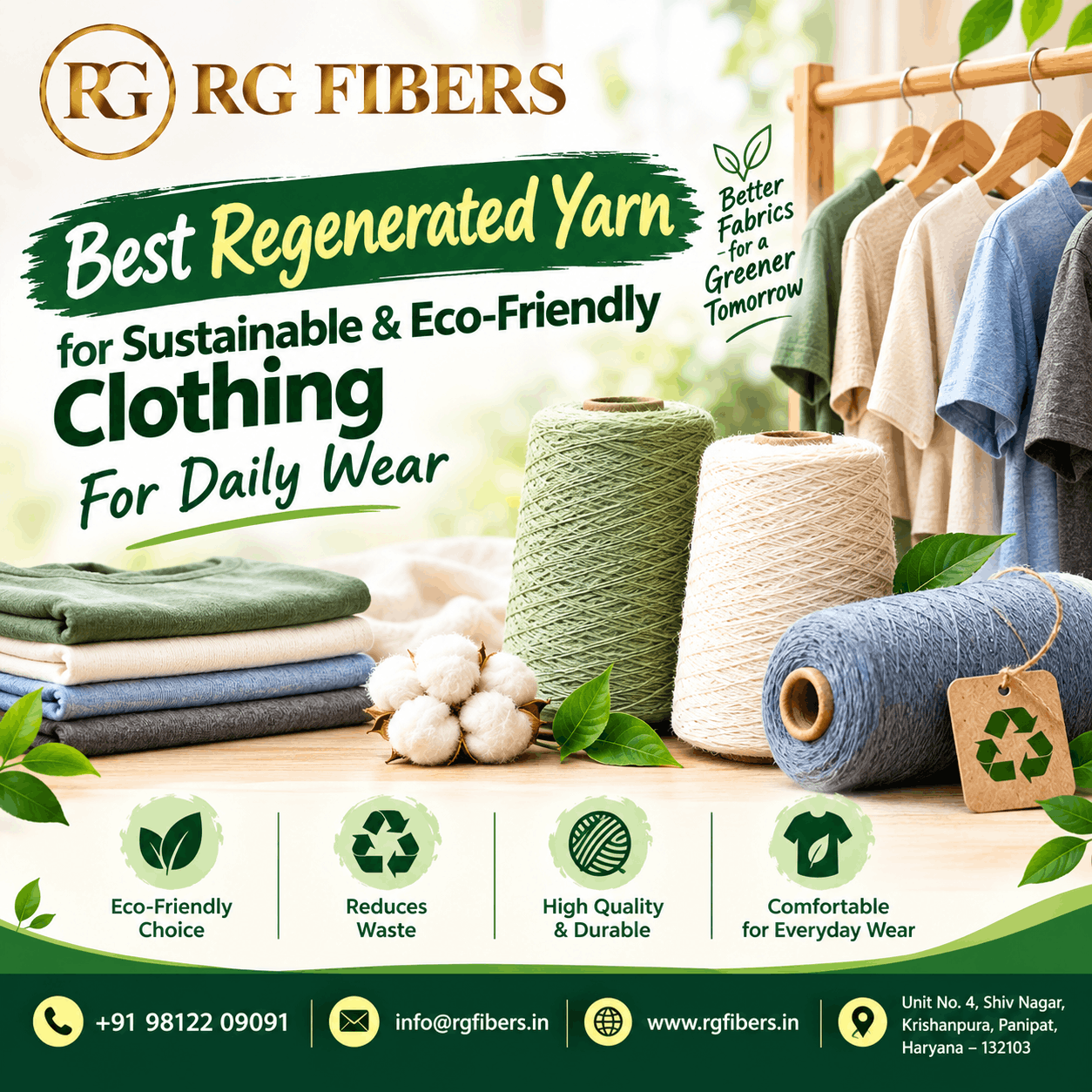
The Secret Behind Sustainable Clothing? Why Regenerated Yarn Is a Game Changer in 2026
Regenerated yarn is spun from fibres recovered from textile waste instead of freshly grown or newly produced fibre. It gives daily-wear clothing a lower environmental footprint without sacrificing comfort, strength or colour.
RG Fibers Private Limited is a GRS-certified recycled cotton yarn manufacturer based in Panipat, India, and was founded in 2019. This guide explains how regenerated yarn works, which types suit daily wear, and how clothing manufacturers can choose the right supplier.
What Is Regenerated Yarn?
Regenerated yarn is yarn made from fibres that have been recovered from textile waste and given a second life as new thread. Instead of cultivating new cotton, mills collect cutting waste and leftover fabric, convert it back into fibre, and spin it into yarn.
This approach creates circular textile yarn. Waste re-enters the production cycle instead of ending up in landfills. Brands that want sustainable textile yarn for everyday clothing now use it widely.
In the trade, people use "regenerated", "recycled" and "reclaimed" yarn with overlapping meanings. In India, regenerated cotton yarn usually means cotton yarn spun from recovered cotton fibre. A later section explains where these terms differ.
How Is Regenerated Yarn Made?
Regenerated cotton yarn is made by sorting, shredding, blending and spinning textile waste into new yarn. The process has five main stages:
- Collection and sorting: Workers separate waste by fibre type and colour. Colour sorting often removes the need for fresh dyeing.
- Shredding and opening: Machines pull the fabric apart and return it to loose fibre.
- Blending: Recycled fibre is often mixed with other fibres to improve strength and spinning quality.
- Spinning: Machines twist the fibre into yarn. RG Fibers uses Open-End spinning for this stage.
- Quality testing: Technicians check count, strength, evenness and shade consistency before dispatch.
What Materials Are Used in Regenerated Yarn?
Regenerated yarn mainly uses cotton waste, and manufacturers often blend it with polyester or other fibres for added strength. Common inputs include:
- Cotton cutting waste from garment factories
- Leftover fabric and yarn waste from mills
- Recycled polyester, often from PET bottles, used in blends
- Other compatible fibres, depending on the end product
The exact blend depends on the buyer's fabric requirements.
How Is Regenerated Yarn Different From Virgin Yarn?
Regenerated yarn comes from recovered fibre, while virgin yarn comes from newly harvested or newly produced fibre. The main differences are:
| Factor | Regenerated Yarn | Virgin Yarn |
|---|---|---|
| Fibre source | Recovered textile waste | Fresh cotton or new fibre |
| Environmental impact | Lower, because it reuses existing material | Higher, because it needs new cultivation or production |
| Fibre length | Usually shorter, so blends often add strength | Longer, so it spins finer and stronger |
| Shade | Often earthy and melange tones | Wide range, including bright and pure whites |
| Best use | Casual, everyday and utility clothing | Fine, premium or high-count fabrics |
Why Choose Regenerated Yarn for Daily-Wear Clothing?
Regenerated yarn suits daily wear because it combines comfort, durability and sustainability at a practical cost. Everyday clothing needs to survive frequent washing, and regenerated blends handle that well.
Key benefits include:
- Lower environmental impact: It reduces textile waste and the demand for virgin cotton.
- Water and resource savings: Reusing coloured waste cuts down on fresh dyeing.
- Cost efficiency: Manufacturers often find it more economical than premium virgin yarn.
- Comfort: Cotton-based content keeps fabrics breathable and soft.
- Brand value: Shoppers increasingly prefer clothing with a clear sustainability story.
- Compliance support: GRS-certified supply helps brands document recycled content.
Best Types of Regenerated Yarn for Daily Wear
The best regenerated yarn for daily wear is usually a cotton-rich blend matched to the garment's comfort and strength needs. These are the most common options:
- 100% regenerated cotton yarn: This suits soft, breathable casual fabrics. It works well in T-shirts and loungewear.
- Regenerated cotton–polyester blend: Polyester adds strength and shape retention. It suits garments that need frequent washing.
- Melange regenerated yarn: Mixed shades give a heathered look without extra dyeing. Casual tops and sweatshirts often use it.
- Regenerated cotton–viscose or other blends: These improve drape and feel for shirts and lightweight fabrics.
- Coarse to medium count yarn: Open-End spinning suits these counts and delivers economical, sturdy fabrics.
What Daily-Wear Clothes Can Be Made With Regenerated Yarn?
Regenerated yarn works for most casual clothing, from T-shirts and trousers to socks and home textiles. Each category has its own yarn needs.
- T-Shirts and Casual Wear - Knit fabrics from regenerated cotton yarn feel soft, breathe well and hold colour. Melange shades suit relaxed, everyday styles.
- Shirts and Tops - Blended regenerated yarns give tops a smoother handle and better drape. Buyers should check yarn evenness for a clean fabric surface.
- Trousers and Bottom Wear - Bottom wear needs strength and abrasion resistance. Cotton-polyester regenerated blends handle daily stress and repeated washing well.
- Socks and Innerwear - These products need stretch, softness and comfort against the skin. Manufacturers usually choose finer, softer blends and confirm the exact spec with the yarn supplier.
- Home and Loungewear - Regenerated yarn suits loungewear, blankets, throws and other soft furnishings. It offers warmth and comfort at an economical price.
Key Factors to Consider When Choosing Regenerated Yarn
Choose regenerated yarn by matching yarn count, strength, softness, colour options and end use to your product. Check these five factors before you place an order.
- Yarn Count and Thickness - Yarn count tells you how fine or coarse the yarn is. Finer counts make lighter fabrics, and coarser counts make heavier, sturdier ones. Ask the supplier which counts they produce and choose one that fits your fabric weight.
- Strength and Durability - Strength decides how well a garment survives washing and wear. Blends with polyester improve tensile strength. Request test data or samples before bulk buying.
- Softness and Comfort - Fibre length and blend ratio affect how the fabric feels. For skin-contact garments, choose softer, cotton-rich blends and test the fabric handle.
- Color and Dyeing Options - Shade-sorted waste reduces or removes the need for dyeing. Melange and earthy tones are the natural strength of regenerated yarn. Ask the supplier about shade consistency across batches.
- Fabric End Use - Define whether you will weave, knit or use the yarn in home textiles. End use decides the count, twist and blend you need.
Regenerated Yarn vs Recycled Yarn for Daily Wear - What Is the Difference?
Recycled yarn is the broad term for any yarn made from reused material, while regenerated yarn is often used for yarn whose fibre has been recovered and reformed for a second life. In everyday trade use, the two overlap, but the details matter.
- Manufacturing Process - Recycled cotton yarn is usually made mechanically. Machines shred waste into fibre and spin it into yarn. Some regenerated fibres, such as certain viscose types, go through a chemical process that dissolves cellulose and reforms it into new fibre. Always ask your supplier which route they use.
- Comfort and Performance - Mechanically recycled cotton has shorter fibres, so blends often add strength. Chemically regenerated fibres can feel smoother and more uniform. Both work for daily wear when matched to the right garment.
- Sustainability Considerations -Both routes reduce waste. Mechanical recycling generally needs fewer chemicals. Chemical regeneration can produce finer fibres but needs careful process control. Certifications such as GRS help buyers verify recycled content claims.
Which Type Is Suitable for Different Clothing Needs?
- Casual T-shirts, sweatshirts, denim and utility wear: Recycled or regenerated cotton yarn works well.
- Smooth, drapey shirts and blouses: Chemically regenerated blends may suit better.
- Socks, innerwear and loungewear: Soft, cotton-rich blends work best.
- Budget-friendly bulk orders: Recycled cotton yarn from an established manufacturer offers the best value.
How to Choose the Best Regenerated Yarn for Clothing Manufacturers
Clothing manufacturers should choose a yarn supplier by certification, production capacity, quality control, consistency and after-sales support. Use this checklist when you compare regenerated yarn suppliers and recycled yarn suppliers:
- Certification: Look for GRS certification and clear documentation of recycled content.
- Capacity: Confirm the supplier can meet your monthly volume without delays.
- Quality control: Ask how they test count, strength and shade.
- Consistency: Request samples from multiple batches.
- Customization: Check whether they can adjust blends, counts and shades.
- Service: Look for reliable delivery and responsive support across regions.
- Transparency: Choose a supplier who explains pricing and enquiry steps clearly.
Why RG Fibers Is a Trusted Regenerated Yarn Manufacturer
RG Fibers Private Limited is a GRS-certified manufacturer of recycled cotton yarn, headquartered in Panipat, India. Mr. Rajiv Garg founded the company in 2019, and Managing Director Akash Garg now leads its growth.
Regenerated yarn is a sustainable textile yarn made from recovered fibre, and RG Fibers Private Limited manufactures it for daily-wear clothing. Founded in 2019 and based in Panipat, India, RG Fibers is a GRS-certified recycled yarn manufacturer trusted by textile mills, garment makers and sustainable fashion brands across India and Nepal.
Our regenerated cotton yarn turns textile waste into strong, soft and versatile thread. It suits T-shirts, casual shirts, trousers, socks, loungewear and home textiles. Every batch supports circular textile yarn goals by keeping waste out of landfills and reducing reliance on virgin cotton.
Why buyers choose RG Fibers:
- GRS-certified recycled content
- 1,00,000 sq. ft. facility
- 13 high-capacity Open-End spinning machines
- 24x7 production for steady supply
- 200+ skilled professionals across production, quality control and logistics
- Custom blends, counts and shades on request
As an established regenerated yarn manufacturer, sustainable yarn manufacturer and eco friendly yarn manufacturer, we help clothing brands meet sustainability targets without compromising quality. Our recycled yarn suppliers network and pan-India service support mean timely delivery and dependable after-sales help.
Whether you need recycled cotton yarn suppliers for bulk orders or a partner for a new eco-friendly collection, RG Fibers offers transparent enquiry, sample support and competitive pricing. Share your requirements today, and our team will recommend the right yarn for your product.
As a regenerated cotton yarn manufacturer and sustainable yarn manufacturer, RG Fibers serves buyers who want dependable eco friendly yarn with certified recycled content. The company also supplies sustainable yarn suppliers, eco friendly yarn suppliers and regenerated cotton yarn suppliers in the supply chain that need consistent volume.
FAQs About Regenerated Yarn for Daily Wear
1. What is regenerated yarn?
Regenerated yarn is yarn spun from fibre recovered from textile waste. It gives waste a second life and reduces the need for virgin fibre.
2. Is regenerated yarn suitable for daily-wear clothing?
Yes. Cotton-rich and cotton-polyester regenerated blends suit T-shirts, trousers, socks, loungewear and other everyday garments.
3. What is the difference between regenerated yarn and recycled yarn?
Recycled yarn is the broader term for yarn made from reused material. Regenerated yarn usually refers to fibre recovered and reformed for reuse. In Indian trade, the terms often overlap, so confirm the process with your supplier.
4. Is regenerated cotton yarn as strong as virgin cotton yarn?
Recovered fibres are usually shorter, so pure regenerated cotton can be slightly weaker. Manufacturers often blend it with other fibres to reach the strength that daily-wear fabrics need.
5. How do I choose a reliable regenerated yarn supplier?
Check for GRS certification, production capacity, quality testing, batch consistency and clear pricing. Ask for samples before you place a bulk order.
6. Does RG Fibers supply regenerated yarn across India?
Yes. RG Fibers supplies textile mills, garment manufacturers and sustainable fashion brands across India and Nepal from its Panipat facility.
Contact RG Fibers For Regenerated Yarn At Best Price in India
RG Fibers Private Limited offers certified regenerated cotton yarn to clothing manufacturers who want quality, consistency and transparent pricing. Share your required count, blend, shade and monthly quantity, and our team will recommend the right yarn and send a quote.
Regenerated yarn helps clothing brands make everyday garments that are comfortable, affordable and kinder to the planet. It turns textile waste into useful yarn, reduces the demand for virgin fibre, and supports a circular textile economy. For daily-wear products such as T-shirts, trousers, socks and loungewear, it delivers reliable performance at a practical cost.
Choosing the right yarn takes careful attention. Match the yarn count to your fabric weight. Test strength and softness on real samples. Check shade consistency across batches, and confirm the exact manufacturing route with your supplier. Most importantly, pick a partner with verified certification and dependable capacity.
RG Fibers Private Limited meets these needs. Founded in 2019 in Panipat, the company operates a 1,00,000 sq. ft. facility with 13 Open-End spinning machines that run 24 hours a day. Its GRS certification, skilled team of 200+ professionals and growing customer base across India and Nepal make it a trusted recycled yarn manufacturer and regenerated yarn supplier.
Sustainable fashion is no longer a niche. Shoppers now expect brands to explain where their fabric comes from, and regenerated yarn gives you a clear, credible answer. Starting with the right supplier makes that transition simple.
Ready to build your next daily-wear collection with sustainable yarn? Contact RG Fibers today to request a quote, order samples or discuss your bulk requirement. Our team will help you choose the right yarn and deliver it on time.