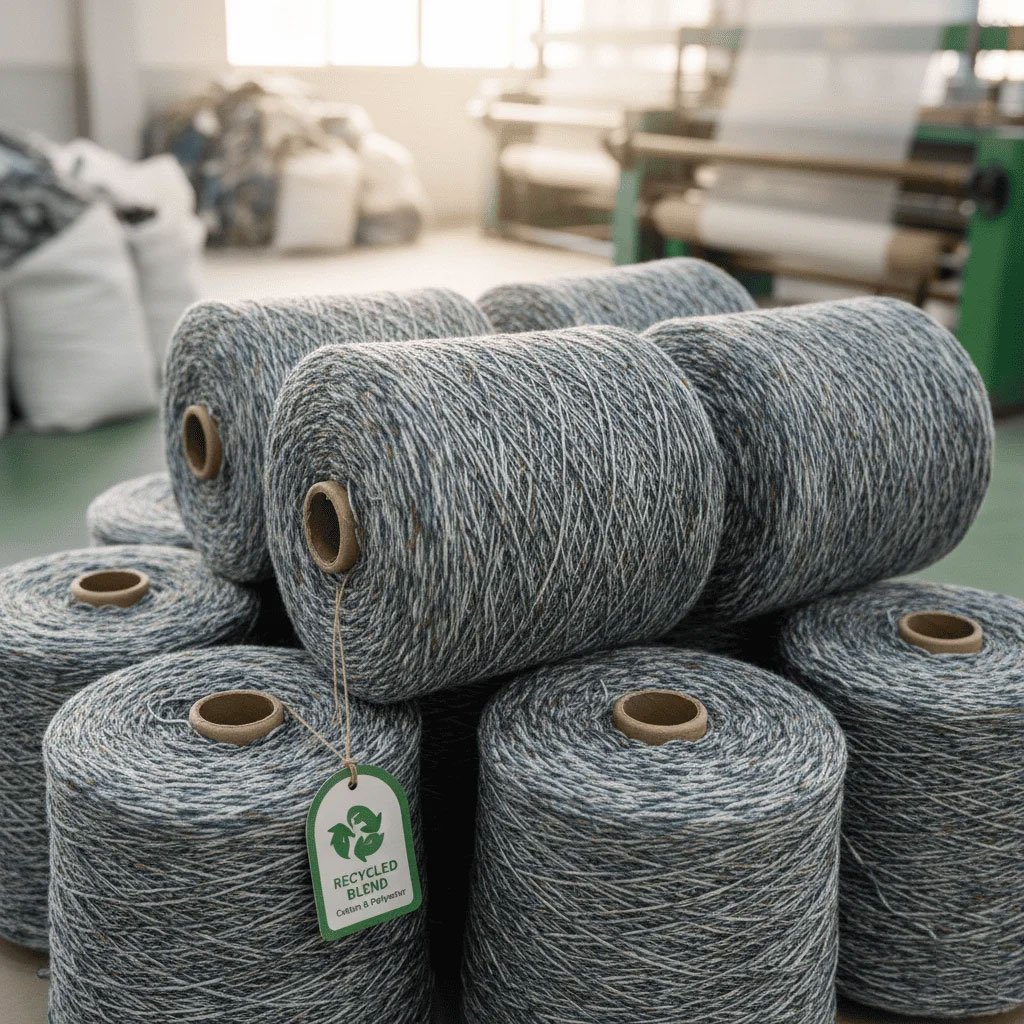
Recycled Blended Cotton-Polyester Yarn: How It is Made And Why It Matters
The Complete Guide to Recycled Blended Cotton-Polyester Yarn: How It's Made and Why It Matters
The textile industry stands at a crossroads. With millions of tons of fabric waste ending up in landfills each year, the need for sustainable solutions has never been more urgent. This is where recycled cotton-polyester yarn emerges as a game-changer, transforming discarded textiles into valuable raw materials for a circular economy.
At RG Fibers, we're proud to be at the forefront of this revolution, helping brands and creators make conscious choices without compromising on quality. This comprehensive guide will walk you through everything you need to know about recycled cotton-polyester yarn, from its creation to its impact on our planet.
What Is Recycled Blended Cotton-Polyester Yarn?
Recycled cotton-polyester yarn is a sustainable textile fiber made by processing post-consumer or post-industrial waste materials. Unlike virgin yarn that requires fresh cotton cultivation and petroleum-based polyester production, recycled yarn gives new life to existing textiles that would otherwise contribute to environmental degradation.
This blended yarn combines the natural breathability and softness of cotton with the durability and wrinkle resistance of polyester. The recycling process transforms old garments, fabric scraps, and manufacturing waste into high-quality yarn suitable for various applications, from fashion to home textiles.
The Environmental Crisis Behind the Innovation
Before diving into how recycled yarn is made, it's essential to understand why it matters. The fashion and textile industry is one of the world's largest polluters, with staggering statistics that demand attention:
- Over 92 million tons of textile waste is generated globally each year
- The average person throws away approximately 70 pounds of clothing annually
- Cotton production consumes enormous amounts of water—about 2,700 liters for a single t-shirt
- Polyester production relies on petroleum, a non-renewable resource, and releases significant greenhouse gases
Traditional textile manufacturing also involves harmful chemical treatments, excessive water consumption, and energy-intensive processes. As recycled yarn manufacturers, we recognized that the solution isn't just about creating less waste—it's about reimagining how we use what already exists.
How Recycled Blended Cotton-Polyester Yarn Is Made: The Journey from Waste to Wonder
The transformation of textile waste into premium recycled cotton yarn involves several sophisticated steps. As experienced recycled yarn suppliers, RG Fibers employs advanced technology combined with careful quality control at every stage.
Step 1: Collection and Sorting
The process begins with sourcing textile waste from multiple channels. This includes post-consumer waste like donated clothing and post-industrial waste such as fabric offcuts from garment factories. Collection is crucial because the quality of input materials directly affects the final recycled cotton-polyester yarn.
Our team meticulously sorts textiles by color, fiber content, and condition. Cotton-polyester blends are separated from pure cotton or synthetic materials. This sorting reduces the need for dyeing later in the process, minimizing chemical use and water consumption.
Step 2: Shredding and Fiber Separation
Once sorted, textiles are mechanically shredded into smaller pieces. This mechanical recycling process breaks down the fabric structure without using harsh chemicals. Advanced machinery pulls apart the fibers, separating cotton from polyester while preserving fiber length and integrity as much as possible.
The goal during this phase is to maintain fiber quality. Longer fibers produce stronger, more durable recycled cotton yarn that performs comparably to virgin materials.
Step 3: Cleaning and Purification
After shredding, the fibers undergo thorough cleaning to remove dirt, dyes, and any remaining impurities. As responsible recycled cotton yarn manufacturers, we use eco-friendly cleaning methods that minimize environmental impact while ensuring the fibers meet strict quality standards.
This cleaning process is what sets quality recycled yarn suppliers apart from those who cut corners. Clean, purified fibers create yarn with better texture, colorfastness, and overall performance.
Step 4: Carding and Blending
The cleaned fibers are then carded—a process that aligns the fibers in the same direction and blends them uniformly. During carding, cotton and polyester fibers are mixed in precise ratios based on the desired properties of the final yarn.
Different applications require different blends. For instance, yarn intended for durable workwear might have a higher polyester content, while yarn for soft home textiles might favor cotton. As versatile recycled yarn manufacturers, RG Fibers creates custom blends to meet specific customer requirements.
Step 5: Spinning
The blended fibers are now ready for spinning, where they're twisted together to create continuous strands of yarn. The spinning process determines the yarn's thickness, strength, and texture. Modern spinning technology allows recycled cotton-polyester yarn suppliers to produce yarn in various counts and specifications, from fine yarns for delicate fabrics to heavier yarns for robust applications.
Step 6: Quality Control and Testing
Before any recycled cotton yarn leaves our facility, it undergoes rigorous testing. We check for tensile strength, evenness, twist, moisture content, and colorfastness. This quality assurance ensures that our recycled yarn performs as well as or better than conventional alternatives.
Quality control distinguishes leading recycled cotton yarn suppliers from the rest of the market. At RG Fibers, we're committed to delivering consistency and excellence in every shipment.
Why Recycled Blended Cotton-Polyester Yarn Matters: The Environmental Impact
Understanding how recycled yarn is made is only part of the story. The real power lies in its environmental benefits, which extend throughout the supply chain.
-
Dramatic Reduction in Water Usage - Cotton is notoriously water-intensive. By using recycled cotton yarn instead of virgin cotton, we eliminate the need for growing new cotton, saving thousands of liters of water per kilogram of yarn produced.
-
Lower Carbon Footprint - The production of recycled cotton-polyester yarn generates significantly fewer carbon emissions compared to virgin yarn manufacturing. We avoid the energy-intensive processes of cotton farming, harvesting, and ginning, as well as the petroleum extraction and polymerization required for virgin polyester.
-
Reduced Landfill Waste - Every kilogram of recycled yarn represents textile waste diverted from landfills or incinerators. By choosing recycled cotton yarn suppliers like RG Fibers, brands actively participate in closing the loop, transforming waste into valuable resources rather than environmental burdens.
-
Less Chemical Pollution - Since much of the textile sorting is done by color, many recycled yarns require less dyeing or no dyeing at all. This dramatically reduces the chemical pollution associated with textile dyeing, which is one of the industry's most environmentally damaging processes.
-
Energy Conservation - Recycling existing textiles requires substantially less energy than producing virgin materials from scratch. From farming to fiber production to spinning, every step of virgin yarn creation demands energy. Recycled yarn manufacturing streamlines this process, conserving precious energy resources.
The Quality Question: How Does Recycled Yarn Compare?
One common concern about recycled cotton-polyester yarn is whether it matches the quality of virgin yarn. The answer depends on the expertise of the recycled yarn suppliers and the technology they employ.
- Strength and Durability - Modern recycling techniques preserve fiber integrity remarkably well. When properly processed, recycled cotton yarn exhibits tensile strength comparable to virgin yarn. The polyester content enhances durability, making the blend suitable for applications requiring longevity and resilience.
- Softness and Comfort - Cotton's natural softness is largely retained through mechanical recycling processes. Many users find that recycled cotton-polyester yarn offers a pleasant hand feel with a slightly lived-in character that adds to its appeal, especially in casual and vintage-inspired applications.
-
Versatility - Recycled yarn isn't just for eco-conscious boutique brands. It's used across diverse industries including fashion, home textiles, upholstery, industrial textiles, and craft supplies. Leading recycled cotton yarn manufacturers like RG Fibers produce yarns suitable for knitting, weaving, and various textile applications.
-
Color Consistency - Through careful sorting and blending, experienced recycled yarn suppliers achieve impressive color consistency. While some variation is natural and even desirable in certain aesthetic contexts, modern processes allow for predictable, batch-consistent colors.
Applications: Where Recycled Blended Cotton-Polyester Yarn Shines
The versatility of recycled cotton yarn makes it suitable for numerous applications:
-
Fashion and Apparel: T-shirts, denim, activewear, casual wear, and accessories all benefit from the comfort and durability of recycled cotton-polyester blends.
-
Home Textiles: Bed linens, towels, curtains, and upholstery made with recycled yarn offer sustainable comfort for conscious consumers.
-
Industrial and Technical Textiles: The strength of recycled cotton-polyester yarn makes it suitable for bags, canvas, and workwear.
-
Craft and DIY: Knitters, crocheters, and textile artists increasingly seek recycled yarn for projects that align with their environmental values.
Choosing the Right Recycled Yarn Suppliers: What to Look For
Not all recycled cotton yarn manufacturers are created equal. When sourcing recycled cotton-polyester yarn, consider these factors:
-
Transparency - Reputable recycled cotton yarn suppliers provide clear information about their sourcing, processing methods, and environmental impact. They should be able to trace materials and explain their recycling process.
-
Certifications - Look for suppliers with relevant certifications such as Global Recycled Standard (GRS), OEKO-TEX, or other recognized sustainability credentials. These certifications verify claims and ensure ethical practices.
-
Quality Consistency - Reliable recycled yarn manufacturers maintain consistent quality across batches. Request samples and test for strength, evenness, and other relevant properties before committing to large orders.
-
Customization Capabilities - The best recycled cotton yarn suppliers offer customization options including specific blend ratios, yarn counts, colors, and treatments to meet unique project requirements.
-
Technical Support - Experienced recycled yarn suppliers provide technical guidance, helping customers select the right yarn for their specific applications and troubleshoot any processing challenges.
RG Fibers: Your Partner in Sustainable Textile Innovation
At RG Fibers, we combine decades of textile expertise with cutting-edge recycling technology to produce premium recycled cotton-polyester yarn. As dedicated recycled cotton yarn manufacturers and suppliers, we understand that sustainability and quality must go hand in hand.
Our commitment extends beyond production. We work closely with designers, brands, and manufacturers to develop custom solutions that meet technical specifications while advancing environmental goals. Whether you need recycled yarn for a small craft project or large-scale industrial production, our team provides personalized support every step of the way.
We source materials responsibly, process them with care, and deliver yarn that performs beautifully while reducing environmental impact. Our facility employs the latest technology in textile recycling, ensuring that every batch of recycled cotton yarn meets our rigorous quality standards.
The Future of Recycled Yarn: Innovation and Growth
The market for recycled cotton-polyester yarn continues to expand as consumers demand more sustainable options and regulations push for circular economy practices. Innovations in recycling technology promise even better quality, more efficient processes, and expanded possibilities for textile waste recovery.
Advanced sorting technologies using AI and spectroscopy will improve fiber separation, allowing recycled yarn manufacturers to process complex blends more effectively. Chemical recycling methods currently in development may complement mechanical recycling, enabling the breakdown and reformation of fibers at the molecular level while maintaining quality comparable to virgin materials.
As recycled cotton yarn suppliers, we're excited about these developments and committed to staying at the forefront of sustainable textile innovation.
Making the Switch: How to Incorporate Recycled Yarn into Your Projects
Transitioning to recycled cotton-polyester yarn is easier than many expect. Here are practical steps to get started:
-
Start Small: Begin with a single product line or project to familiarize yourself with recycled yarn characteristics and processing requirements.
-
Communicate the Story: Consumers appreciate brands that embrace sustainability. Share your commitment to using recycled cotton yarn and explain the environmental benefits.
-
Work with Experienced Suppliers: Partner with established recycled yarn manufacturers like RG Fibers who can guide you through technical considerations and provide consistent supply.
-
Test Thoroughly: Request samples and conduct thorough testing to ensure the recycled cotton-polyester yarn meets your performance and aesthetic standards.
-
Adjust Expectations: Recycled yarn may have slight variations in color or texture. Embrace these as marks of authenticity rather than imperfections.
Every Yard of Yarn Tells a Story
Recycled cotton-polyester yarn represents more than just a sustainable alternative—it's a fundamental shift in how we think about materials, consumption, and our responsibility to the planet. Each spool of recycled yarn tells a story of transformation, turning what was once waste into something valuable and new.
The textile industry's environmental challenges are significant, but solutions exist. By choosing recycled cotton yarn from responsible manufacturers and suppliers, brands and individuals alike contribute to a circular economy that values resources, reduces waste, and protects our environment for future generations.
At RG Fibers, we're honored to be part of this transformation. As committed recycled cotton yarn manufacturers and suppliers, we invite you to join us in reimagining textiles—one yard of recycled yarn at a time.
Ready to explore how recycled cotton-polyester yarn can enhance your products while reducing environmental impact? Contact RG Fibers today to discuss your specific needs. Together, we can create beautiful, durable, sustainable textiles that make a difference.
RG Fibers - Leading Recycled Cotton Yarn Manufacturers and Suppliers committed to quality, sustainability, and innovation in textile recycling.